


Memories Live in Food
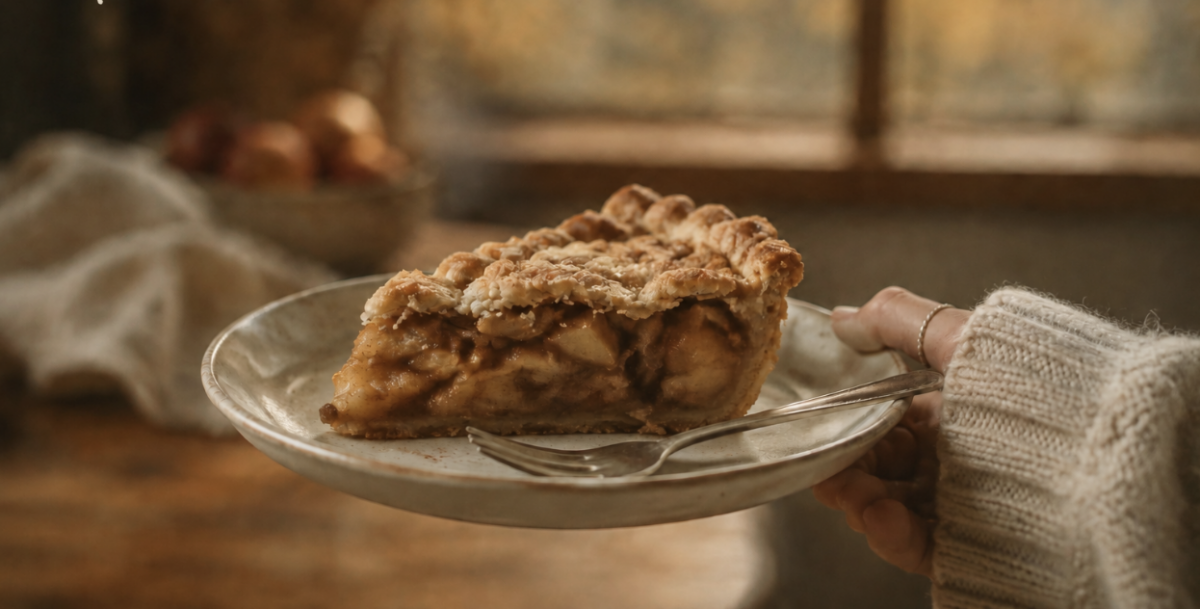
Sometimes remembrance does not look like visiting a grave or looking through photographs.
Sometimes it smells like cinnamon, tastes like Sunday dinner, or lives on a stained recipe card in handwriting you would recognize anywhere.
Some memories live in the food we share.
One familiar smell can return us to a kitchen as it once was. A recipe can remind us not only of what our person made, but how they made it—the shortcuts they took, the mess they left, or the ingredient they never measured.
When our person dies, food can become one of the places where grief finds us.
Across cultures, food has long been part of mourning. People bring meals to grieving families, gather after funerals, prepare certain dishes on death anniversaries, or leave food as an offering.
The traditions differ, but the message is often the same: someone we love has died, and no one should have to carry what comes next alone.
The Empty Seat
November can bring food, family, and tradition into sharper focus. But grief can make the table feel painfully different.
There may be an empty chair. A recipe no one else knows how to make. A moment when someone says, “This was their favorite,” and the whole room changes.
Or perhaps no one mentions your person at all—and that silence hurts, too.
You may want to preserve every tradition exactly as it was. You may want to change everything because “the usual way” feels unbearable. You may want company, or you may want takeout alone.
There is no correct way to set a table after someone who belonged there has died.
What If We Fed Our Grief?
We often talk about carrying grief or working through it. But what if, sometimes, we fed it?
That might mean making your person’s favorite meal, ordering from the restaurant they loved, or teaching someone else a family recipe.
It might mean writing down more than the ingredients: who made it, what the kitchen smelled like, the step they always skipped, and the stories that made the food matter.
Or feeding your grief might simply mean eating something—anything—when cooking feels impossible.
Taking care of your body is not a betrayal. Enjoying a meal does not mean you have forgotten that your person died. It means you are still here.
This November, you do not have to choose between gratitude and grief. They can sit at the same table.
You can laugh during dinner and cry while washing the dishes. You can feel thankful for the time you had and angry that there was not more. You can continue a tradition, change it, or let it go.
So make the recipe—or don’t.
Light a candle. Tell the story. Order the takeout. Leave the table early if you need to.
And if a familiar taste or smell makes your person feel close for just a moment, let it.
Some memories live in the food we share.
Sometimes, it helps us remember, too.
Whatever this season brings to your table, you do not have to face it alone.
The holidays can feel especially isolating after your person dies. On HealGrief’s® AMF App, you can share memories, speak honestly about the season, or simply connect with people who understand.
Register to join HealGrief’s® AMF App, where community is available 24/7—right in your pocket.
What Does Your Grief Need Us to Hear?
Every October, death comes out of hiding.
Skeletons sit on porches. Ghosts hang from trees. Gravestones appear in front yards. We dress like the dead, laugh about death, and invite it to the party.
But when death is real—when your person has actually died—people suddenly become uncomfortable.
They lower their voices. Avoid saying your person’s name. Change the subject. They worry that mentioning the death will remind you, as though you could ever forget.
So you learn to make your grief smaller.
You say, “I’m okay,” because telling the truth feels exhausting. You cry in the car before walking into work. You leave the gathering before anyone notices. You learn who can handle your honesty—and who needs your grief to be quieter.
But grief is not quiet.
It can be angry, messy, tender, repetitive, and inconvenient. It can make you want to scream. It can also leave you with no words at all. Neither response requires an apology.
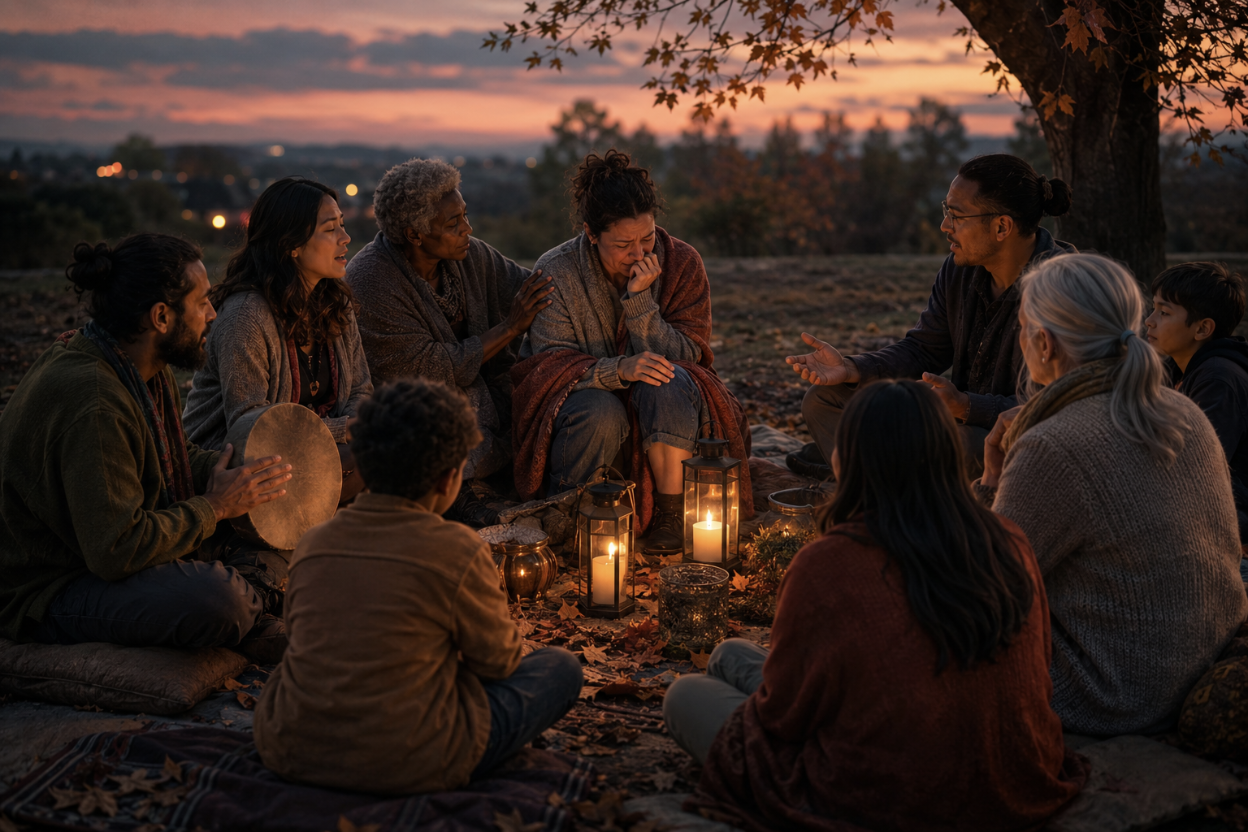
The expectation that grief should remain private is not universal. Across cultures, mourning has long included wailing, singing, drumming, dancing, storytelling, and public processions. Grief was something the community could see and hear. The pain belonged to the grieving person, but they were not expected to carry it alone.
There is something powerful about grief being witnessed.
Not fixed. Not analyzed. Not rushed.
Witnessed.
That is what makes October feel so strange. We make room for imaginary ghosts, but often struggle to make room for real grief.
October also stands at the edge of a difficult season. Soon there will be gatherings, traditions, familiar recipes, and empty chairs.
Your body may feel it before your calendar does.
You may feel more anxious, tired, or disconnected. That does not mean you are going backward. It means the year is moving through places that hold meaning.
You are allowed to change traditions, decline invitations, leave early, or create something entirely new. You are also allowed to laugh and enjoy yourself. Joy does not betray your person or erase the fact that they died.
Giving grief a voice does not mean telling everyone everything. It might mean telling one trusted person the truth. Writing your person a letter. Crying without apologizing. Saying their name when others avoid it.
The goal is not to grieve loudly.
The goal is to grieve honestly.
Your person died. That truth changed your life. You are allowed to speak about what came after.
This October, let’s make room for something more real than ghosts: the names, stories, tears, laughter, and memories grief carries.
And if you love someone who is grieving, you do not need the right words. You only need to be willing to hear theirs. Send this to someone who wants to help but isn’t sure how.
Instead of asking grieving people to lower their voices, let’s ask:
What does your grief need us to hear?
You do not have to carry your grief quietly or alone. The AMF app offers a community where you can talk about your person, share what you are experiencing, or simply listen until you feel ready.
Register to join HealGrief’s® AMF App—a community available 24/7, right in your pocket.
Deaths the World Doesn’t Know How to Talk About

September is Suicide Prevention Month, and September 10 is World Suicide Prevention Day. Most conversations this month will focus on prevention, and that matters. But today, we’d like to make space for something else… for the people whose person died by suicide. Because when the awareness campaigns end, and everyone moves on, you’re still living with a grief that doesn’t simply disappear.
Grief after suicide can feel different. Not because your grief is somehow “more” than anyone else’s, but because it often comes with questions that have no satisfying answers. Why? Could I have done something? Did they know how much they meant to me? Did I miss the signs? These questions can replay over and over, even years later. You may feel heartbreak, anger, confusion, guilt, relief that their pain has ended, or all of those emotions in the same day. All of those feelings are normal. It’s what makes us human.
One of the hardest parts of suicide loss is how uncomfortable it makes other people. Friends may avoid bringing up your person because they’re afraid of saying the wrong thing. Family members may avoid talking about how they died altogether. Some people search for explanations or try to offer simple answers to something that isn’t simple. Others disappear because they don’t know what to say. The silence that follows can become another kind of grief.
But your person was never defined by the way they died. They had a story long before that moment. They laughed, made people smile, had favorite foods and songs, dreams, flaws, routines, inside jokes, and people they cared about. Their life deserves to be remembered in its entirety… not reduced to the circumstances of their death. Honoring your person means remembering all of who they were, not just how they died.
If this day feels especially heavy, you don’t have to force yourself to be okay. There isn’t a checklist for honoring your person or for surviving today. You can say their name out loud. You can look through old photos or listen to a song that reminds you of them. Maybe you write them a letter. Maybe you simply cry. Or maybe today you make it through the day, and that’s enough. Grief doesn’t ask us to perform. It asks us to keep showing up, one moment at a time.
If guilt has become something you carry every day, we hope you’ll remember this: loving someone does not make us all-knowing. You can love your person with everything you have and still not know the depth of what they were carrying. You can replay conversations, wonder about different choices, and wish for one more chance without ever finding the answers you’re searching for. Those questions are born from love, not failure.
This month, we remember the people who died by suicide. We honor the lives they lived, the relationships they built, and the impact they continue to have on those who love them. And to anyone bereaved: your grief deserves space. It deserves compassion. It deserves to be spoken about without shame or judgment. Most of all, it deserves a community where you don’t have to explain why today feels heavy. We’re honored to hold that space with you.
____________________________________________________________________________
Looking for connection beyond this article?
The new Actively Moving Forward® app is now available. Download the app, log in using your existing HealGrief® email, and access your groups and community with a refreshed experience — 24/7.
Community is just a tap away. 💙
Grief Doesn’t End. It Changes.

In honor of National Grief Awareness Day
People often expect grief to follow a timeline.
A few days.
A few months.
Maybe a year.
Then, somehow, they expect life to return to “normal.”
But if you’ve experienced the death of your person, you know grief doesn’t work that way.
Grief isn’t just crying after the funeral.
It’s instinctively reaching for your phone to text them before remembering you can’t.
It’s hearing someone laugh in a way that sounds just like them.
It’s wondering what advice they’d give you today.
It’s celebrating a promotion, a birthday, or a new grandchild while quietly wishing they were here to witness it too.
It’s realizing years have passed, yet one familiar smell, one song, or one ordinary Tuesday can bring you right back to the moment everything changed.
Grief doesn’t mean you’re stuck.
It doesn’t mean you’re “not moving on.”
It means your relationship with your person continues, even though they died.
Over time, grief changes shape.
Some days it whispers.
Some days it crashes over you without warning.
Some days it’s woven so gently into your life that you almost don’t notice it’s there—until you do.
And that’s okay.
Healing isn’t about leaving your person behind.
It’s about learning how to carry both love and sorrow together.
In honor of National Grief Awareness Day, may we remember that grief isn’t something to fix, rush, or compare.
It’s a reflection of love.
If you’re grieving today, whatever your grief looks like is enough.
You don’t have to explain it.
You don’t have to justify it.
And you certainly don’t have to “be over it.”
Your grief is part of your story because your person will always be part of your story.
____________________________________________________________________________
Looking for connection beyond this article?
The new Actively Moving Forward® app is now available. Download the app, log in using your existing HealGrief® email, and access your groups and community with a refreshed experience — 24/7.
Community is just a tap away. 💙

Forever My Dad, Forever My Hero


No One Told Me Year Two Might Feel Like This There’s a quiet shift that can happen after the […]
Year Two


No One Told Me Year Two Might Feel Like This There’s a quiet shift that can happen after the […]
Things I Didn’t Lose to Grief

Things I Didn’t Lose to Grief Grief took a lot. It took the version of the future […]
Today, I Miss You Like This

Today, I Miss You Like This Today I missed you in the cereal aisle. Not in a dramatic way. […]